A semantic layer built top-down takes months and still misses what people actually ask. Terazu works the other way round: the questions come first, and they decide what gets certified next.
One score, checked fresh
Coverage has its own tab, Ontology › Coverage. It takes every question on record and runs it through the same engine that serves answers, from scratch, every time you open it. The questions come from three places, and each says where:
- Reports Terazu has read, each dataset read whole as the question it asks.
- Your query history, where a person turned it on, with how often each statement ran.
- The chat, when a question there couldn’t be answered.
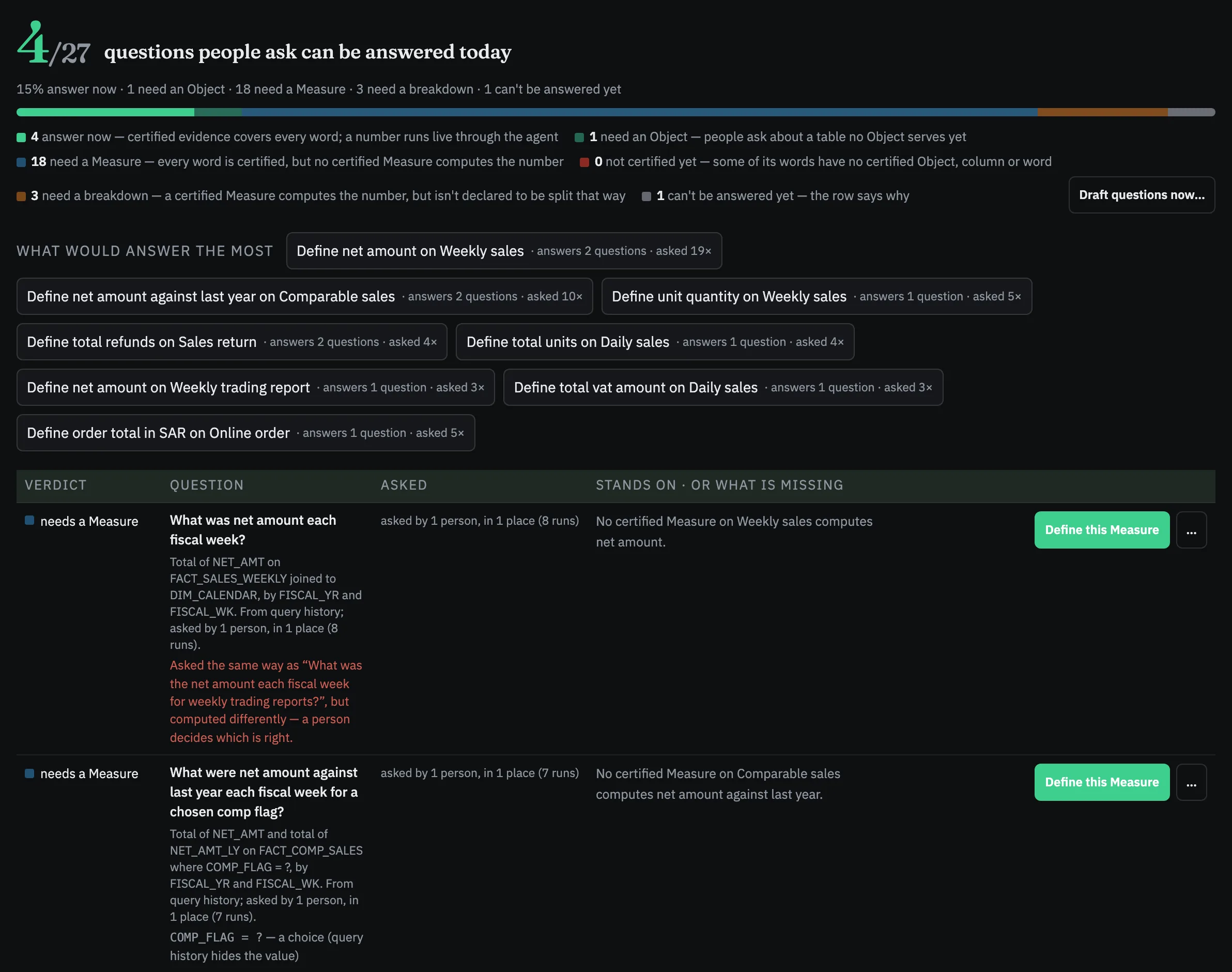
Each question gets a verdict that says what it needs: it answers now, or it needs an Object, a Measure or a breakdown, or some of its words aren’t certified yet, or it can’t be answered yet, with the reason on its row. Answering means the number stands on certified evidence with its citations. It doesn’t mean someone checked the number; the number is computed live, every time.
What would answer the most
The missing definitions are ranked by how many questions they would answer, then by how often those were asked. On the demo, defining net amount on Weekly sales would answer two questions that ran 19 times between them. That ranking is the to-do list: certify what people are waiting for, not what happens to be next in the warehouse.
Every row carries its fix
A question that can’t answer offers the one act that would answer it: define this Measure, filled in from the question; model a table no Object serves; add a breakdown; certify a Link. A person whose role can’t make the fix sees who can, and can ask them. Home carries the same list: the questions people ask, how many answer today, and what to do next.
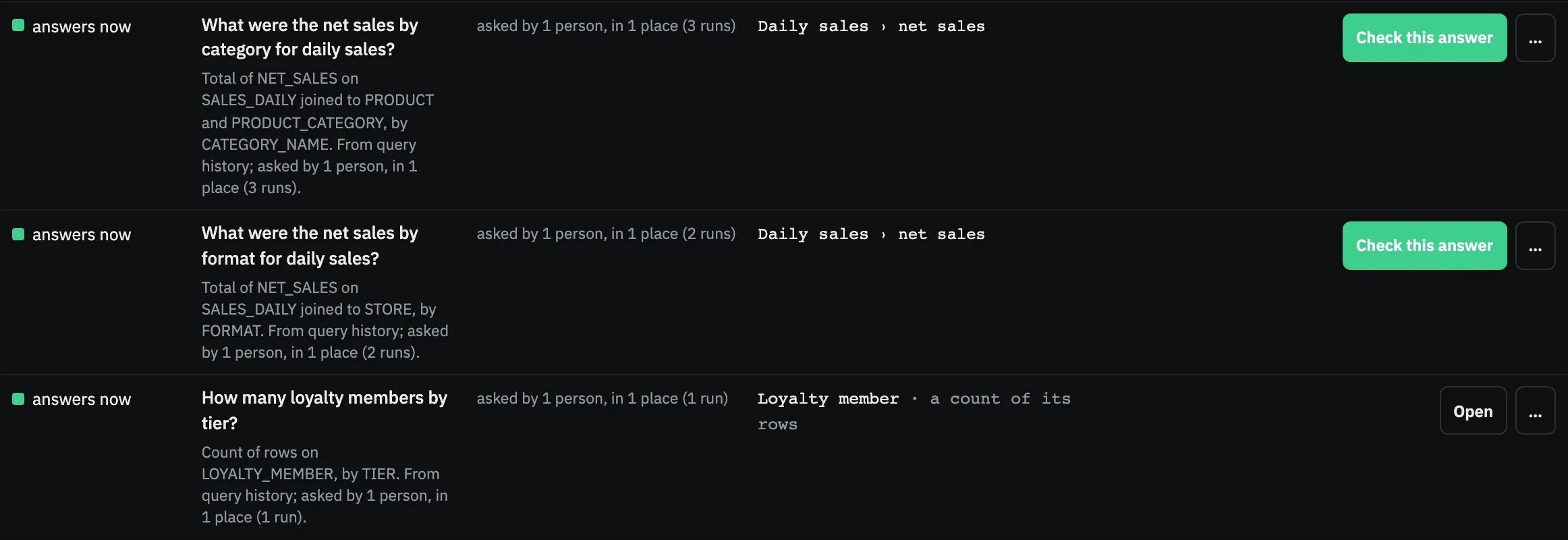
To check one, press Check this answer on its row: Terazu measures the number where else your estate computes it and says where they agree or part.
What it doesn’t do
- It counts asks; it doesn’t weigh them. Which questions matter most is still your call.
- It doesn’t certify the definitions a question needs. People do.