Most enterprise data programs have tried the big version at least once: model the whole company, agree on every definition, then let people use it. It rarely ships, and when it does, it describes a company that has already changed.
Terazu starts the other way round. A pilot begins with the numbers people already argue about and the questions they already ask. Terazu reads the whole estate behind them, and your people certify only what those numbers need.
Why the numbers first
A number people argue about rarely sits in one part of the business. On our demo, net sales is computed in the warehouse’s daily sales table, in a channel summary built from it, and in the finance team’s Cognos model, each with a different owner. Drawing a domain around it first means choosing where to look before there is any evidence. Starting from the number puts its owners in the room, keeps the review small enough to finish, and produces something people use, instead of a model nobody does.
It also keeps the scope honest. Terazu reads everything you connect, but reading isn’t certifying. The reading is bounded by a read budget you set, certified first and most used first. Certification is where people spend their time, so it goes where the arguments and the questions are.
How a pilot runs
- Connect. Terazu runs on your servers, and the agent sits beside your databases with read-only access.
- Census. Terazu maps what’s there, what feeds what, and what it can’t see.
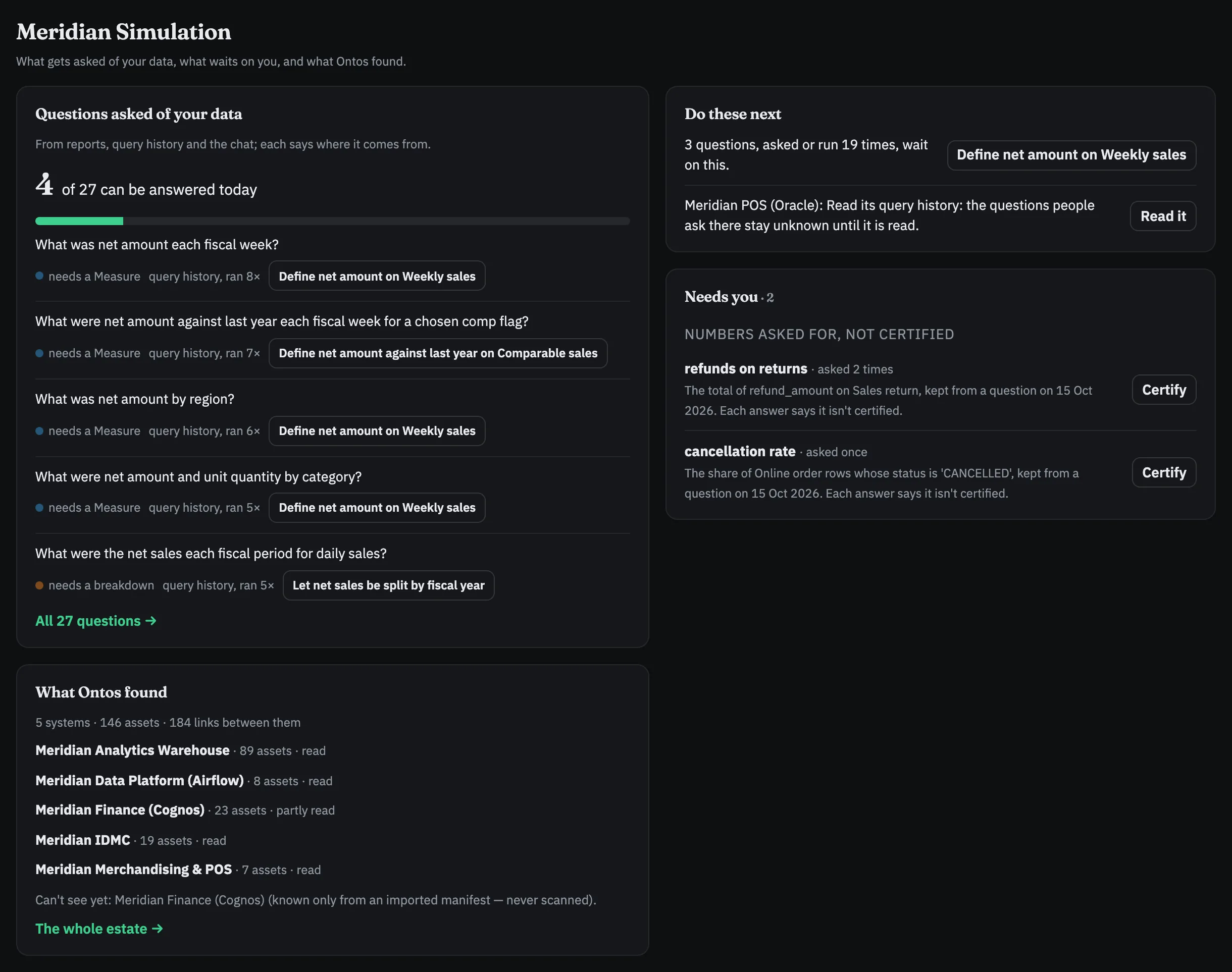
- Choose. From that evidence, you pick the numbers and the questions. Terazu doesn’t choose for you, but it shows you what people already ask: Home lists the questions read off your reports, the chat and, where you turn it on, your query history, how often each one ran, and how many can be answered today.
- Draft. Terazu drafts the meanings and Measures those questions need, each bound to the tables that implement it, with its evidence and what Terazu recommends.
- Check. Check every number takes every Measure, certified or draft, for one period, certified and most used first, within the read budget, and gives one ranked list: the numbers that differ, the drafts that give the BI model’s number, what couldn’t be checked and why, and what agrees. It never picks a side.
- Certify. The owners review and certify just enough to answer the questions.
- Ask. The team asks in plain language in the chat and gets the number with its receipt. Coding assistants can ask over MCP: they get how the question was read and a link to the receipt, and the figure opens for the person, never the model. A number nothing certified covers yet is marked not certified, and a question Terazu can’t pin down is refused, naming what’s missing.
A domain, if you want one
Domains are optional, and nothing needs one. In the Everything app mode, Terazu proposes domains from your BI models and report folders, and a person accepts or discards each one. Pick one as a focus and reviews show its meanings first, with the rest folded and counted. Answers always look across every domain.
Minimum useful context
The goal of a pilot has a name in how we build the product: minimum useful context. Certify only enough to answer a useful set of questions and support one real workflow, and never a complete ontology first.
Progress is measured, not guessed. Coverage shows which of the questions people ask answer today, and names what’s missing for the rest. When a question can’t be answered, the refusal says which definition to write next and who can write it, and the numbers people asked for that nothing certifies yet wait on Home, one click from certifying. The road to done is a queue rather than a meeting.
Certify just enough to answer the numbers people argue about. Then the next ones they ask for.
Then the next numbers
Once the first numbers answer, the next ones start from a better place: the census already exists, shared concepts are already certified, and the questions people asked and couldn’t get answered point to where to go next. The contract grows the way the business uses it, the most used first.