One meaning on the demo, 1:13. Recorded on Meridian Simulation, a simulated retailer: Daily sales’ own page, then Estate › Threads. Nothing is mocked up. Recorded under the working name, Ontos. Captions are in the player.
What to look at
Ask what “daily sales” is in most companies and you get a table name. Ask which tables hold it, which numbers use it, where its data starts and who may ask about it, and you get a meeting. Terazu keeps those answers in one place, starting from the meaning.
Meanings first, tables second
- A meaning is what something is: a store, a till line, a day of sales. On screen it’s an Object, on Ontology › Objects.
- Tables serve meanings. One meaning can live in several tables: where its data is born, the copies loads make of it, the table answers come from, and the summaries built on it. Terazu says which table answers, and why, from evidence such as keys, loads and readers.
- Certifying a table means choosing its meaning. You can’t certify a table without saying what it is, and its grain is stated: “one row per sales_daily_id”.
Open a meaning, see what rests on it
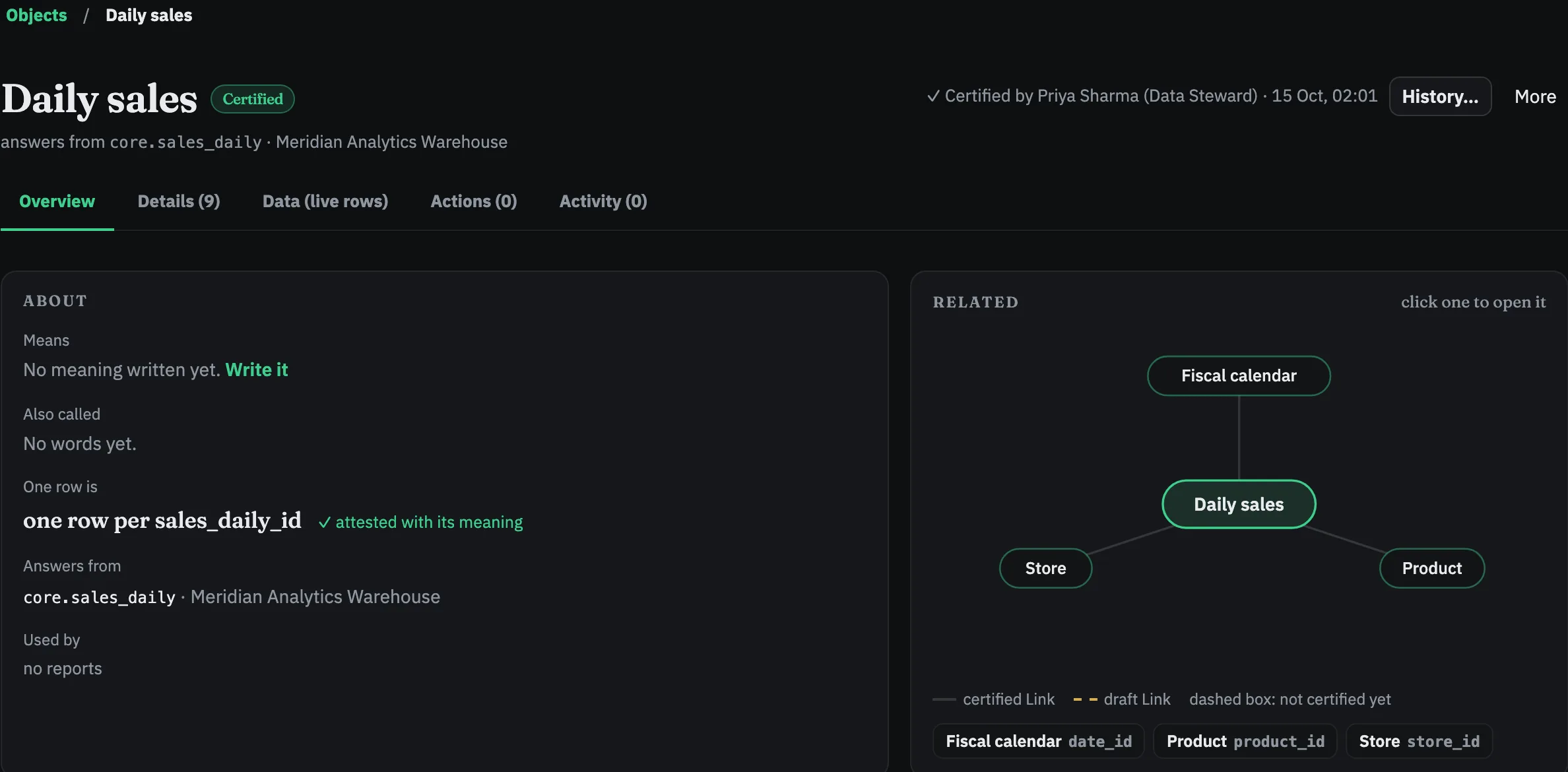
Each meaning has its own page: what it means and its other words, what one row is, the table it answers from, the reports that use it, the meanings it links to, the Measures defined on it, and who certified it and when.
Further down the same page, Where it lives lays out every table behind the meaning, in the order the data moves.
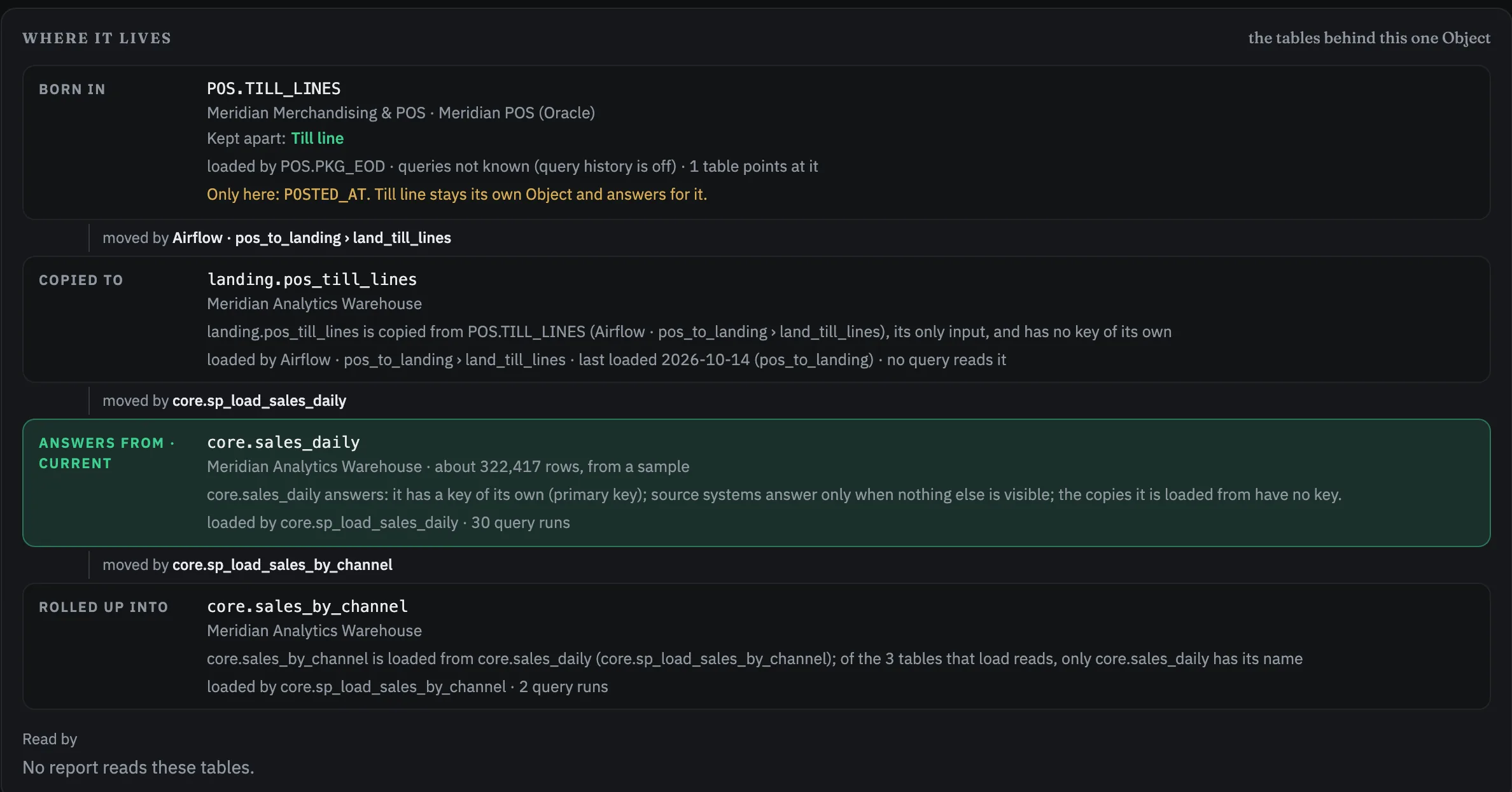
core.sales_daily and rolled up into a summary. Each step says how Terazu knows it.The page also shows what the assistant reads when a question names this meaning: the meaning, the ones it links to, their Links and certified Measures. The other places it lives are kept out, so they are cited and never answered from.
Follow a number back to where it’s born
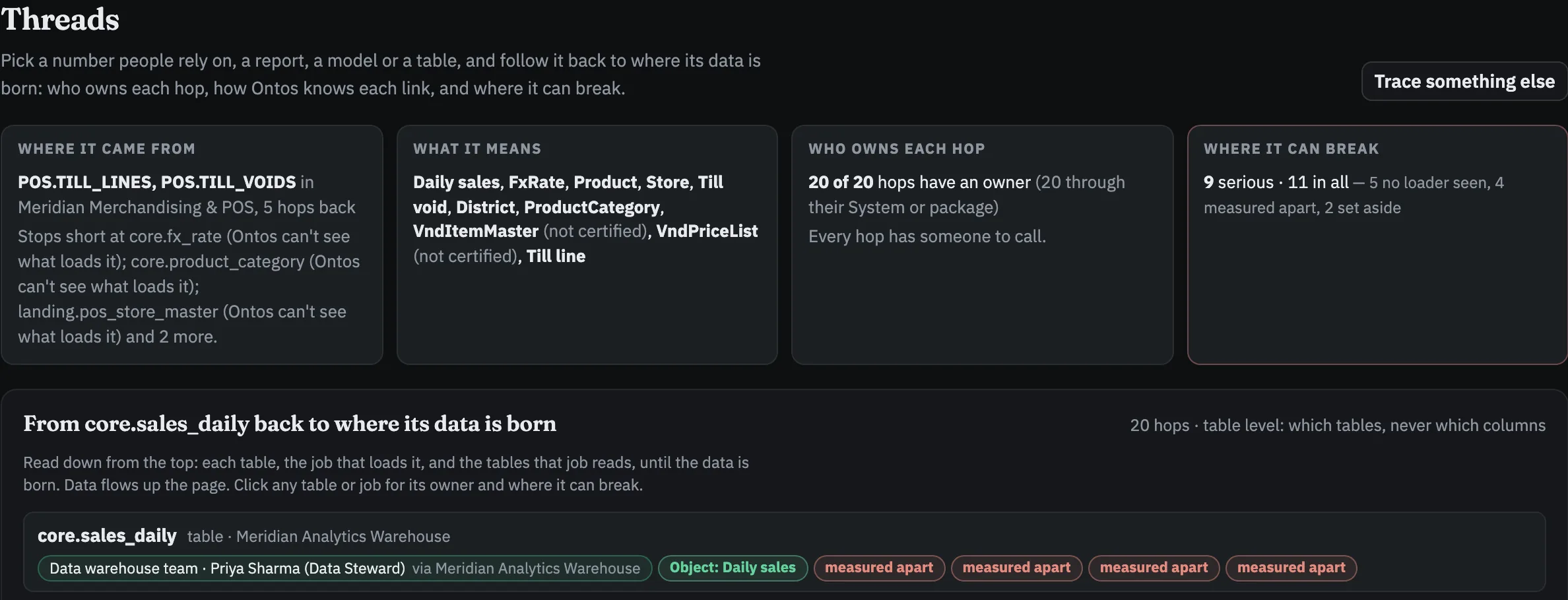
Estate › Threads starts from a number, a report or a table and follows it back through every hop: who owns each one, how Terazu knows each link, and where the chain can break.
Who may ask
Each meaning and each Measure can be limited to some roles. Leave it empty and everyone who may ask anything can ask. An asker outside the list gets a refusal that names what was withheld, instead of a different number from somewhere else. Owners and admins are never shut out, and changing who may ask doesn’t change the definition, so it doesn’t take the certification away.
What it doesn’t do
- A hop with no captured data flow means none was captured, not that nothing writes the table. The thread says so where it stops short.
- Threads work at the table level: which tables feed which, never which columns.
- “Who may ask” governs people with a role. Programs calling with an API key have no role, so govern them by what their key is allowed to do.