Every company has its own dialect. Finance says “LFL”, stores say “like-for-like”, the warehouse says comp_sales_weekly. An assistant that guesses between them will sometimes guess wrong, and nobody will notice. Terazu doesn’t guess: a word answers as certified only when a person has certified what it means, and any other reading says so on the receipt.
The words
Ontology › Objects › Words lists the words people use and what each one points to. Certified words ground questions; drafts wait for a person. “Comp sales”, “LFL sales” and “like-for-like sales” can all point to one weekly comparable-sales table, and “card holder” and “loyalty customer” to a loyalty member. On the demo, eight words are in use beyond the names: “sales” and “revenue” for net sales, “gross revenue” for gross sales, “SKU”, “Item” and “Product Description” for a product, and “Date” and “Fiscal calendar” for the calendar.
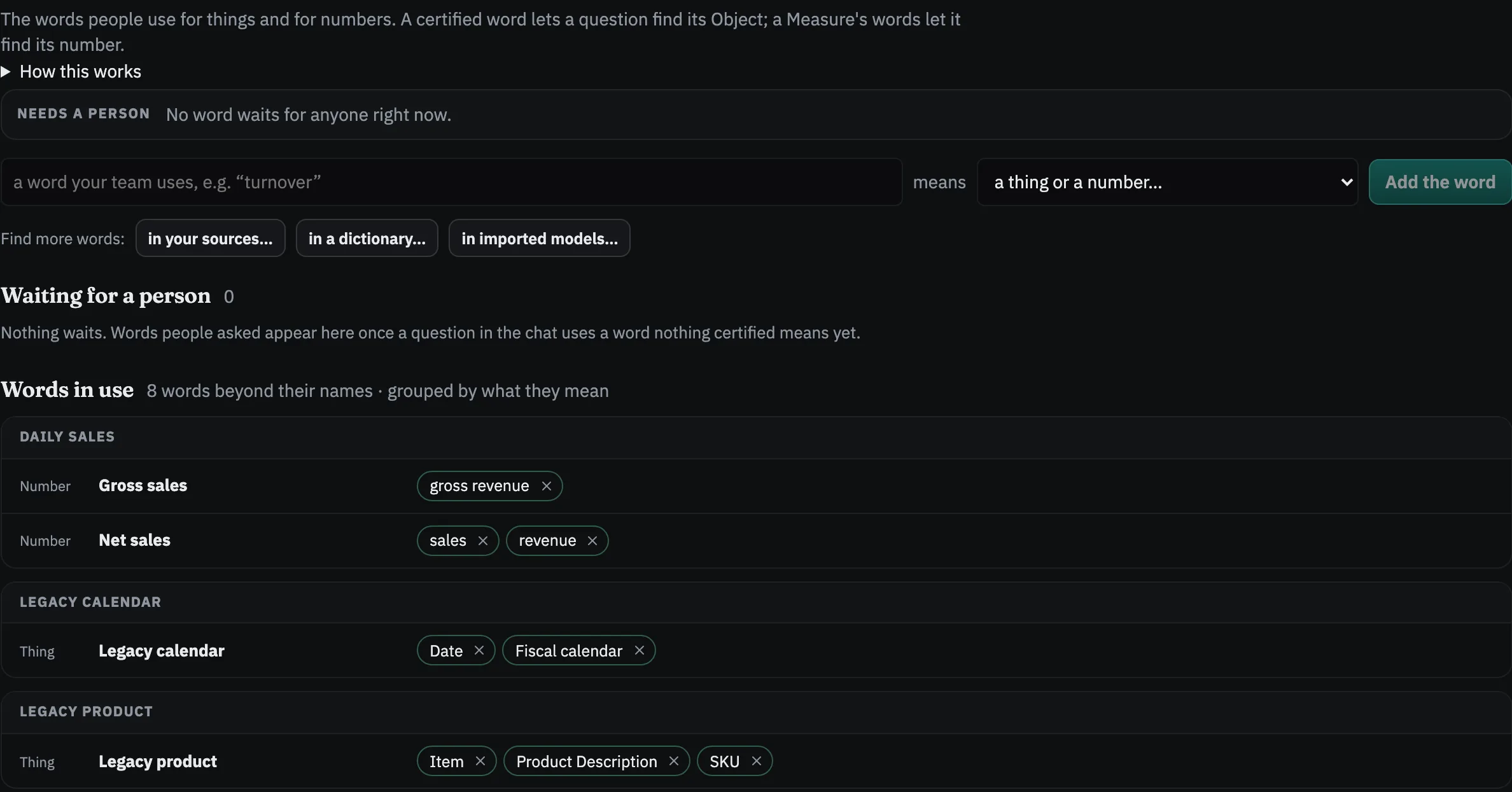
Only a certified word answers as certified
When someone asks a question, a language model reads it, and the engine checks every piece of that reading against what’s certified before anything runs. A word read as something it isn’t certified for is said on the receipt, so a person can check it. A question that can’t be pinned to certified pieces is refused, naming what’s missing, rather than answered from the nearest match.
On the demo, asked how much was refunded on returns, the receipt says it was read as “refunds on returns (not certified)”. Asked for gross margin, Terazu refused: nothing certified defines it, and the question didn’t say how to work it out. That refusal is shown in Anatomy of a receipt.
Where new words come from
- Your own SQL. With your consent per connection, Terazu reads column aliases in your views and procedures, the names your developers already chose, and proposes them with where they came from.
- Renames. When a table’s name changes, its old name is proposed as a word for it, so questions that use the old name keep working.
- Experts. An expert’s answer the assistant noted, once a person approves it, can propose a word.
- What you import. Words from the semantic models you imported, or a dictionary of your own.
- Questions. A word someone used in the chat that nothing certified means yet waits on the Words view for a person.
- People. Anyone with the right role can add one by hand.
Suggestions from similarity search only rank candidates. None of these becomes a certified word until a person certifies it, and a rejected word isn’t proposed again.
Words for numbers, too
Measures carry their own words, shown as “also asked as” on each Measure. They route questions about numbers, and the most specific phrase wins, so “gross sales” and “net sales” don’t collide. Adding an “also asked as” phrase to a Measure doesn’t change the number, so it doesn’t take the certification away.
What it doesn’t do
- Regular plurals match (SKU and SKUs, category and categories); irregular ones, like person and people, don’t.
- Changing a certified word takes its certification away until someone reviews it again.