The census on the demo, 1:09. Recorded in Estate › Atlas on Meridian Simulation, a simulated retailer. Nothing is mocked up. Recorded under the working name, Ontos. Captions are in the player.
What to look at
Most tools show you what they found. The harder question is what they missed. A dashboard built on a warehouse that half the business routes around is confidently wrong, and nothing on it says so. The Estate Atlas starts from the other end: it names the blind spots.
The census
The Atlas is an inventory of your estate, and nothing more. It never proposes a strategy; it counts, with the evidence behind each count.
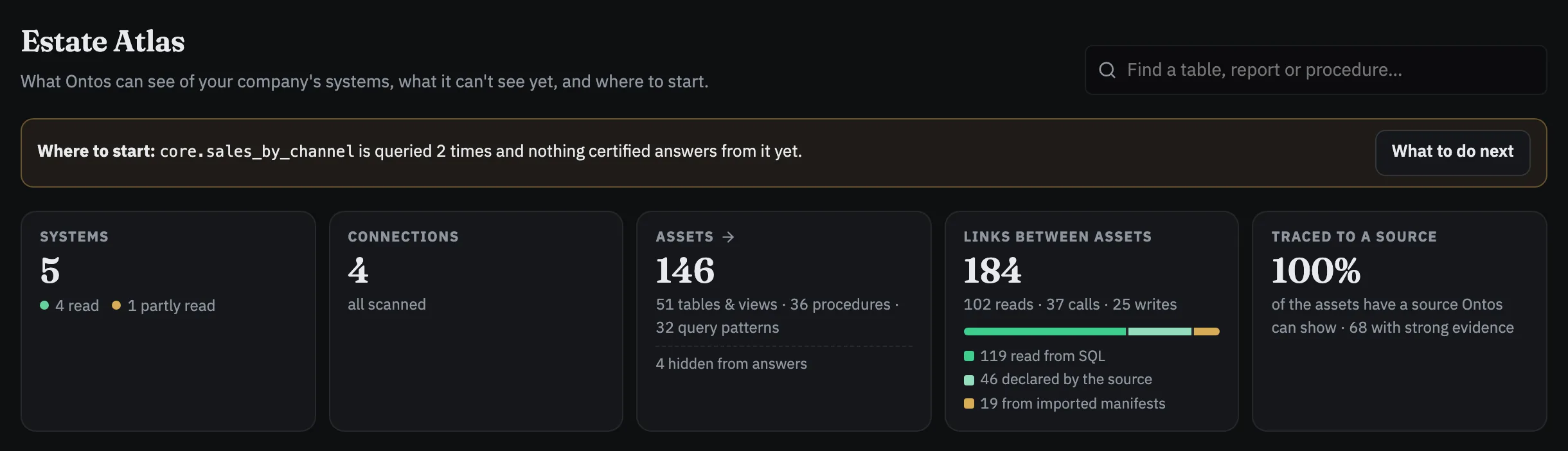
- Systems are declared by a person. Terazu never invents one.
- Assets are the tables, views, reports and models it knows about. When a source table disappears, its record is kept and marked, not deleted.
- Evidence coverage is the share of assets with at least one piece of evidence behind them.
- How we know splits every line between assets by where it came from: declared by the source, read from SQL, or taken from an imported manifest.
Dark territory, named
Under the counts, “What Ontos can’t see yet” lists the blind spots: systems with no connection, systems known only because another tool’s export mentions them, connections never scanned. Below them, each connection lists the captures it hasn’t run.
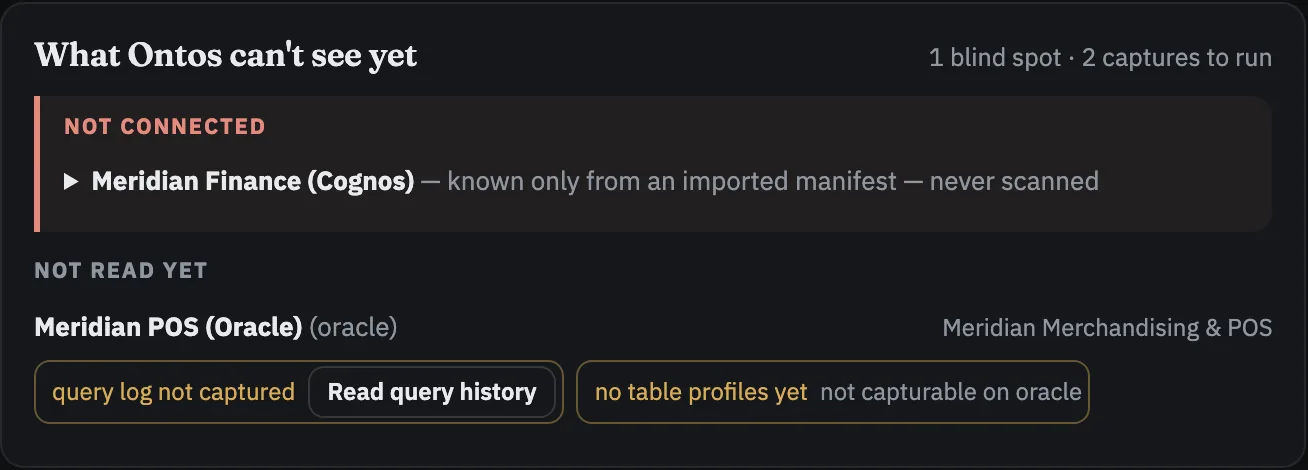
A blind spot isn’t a failure. It’s the difference between “we checked, and there’s nothing” and “we never looked”, written where everyone can see it.
What each system is missing
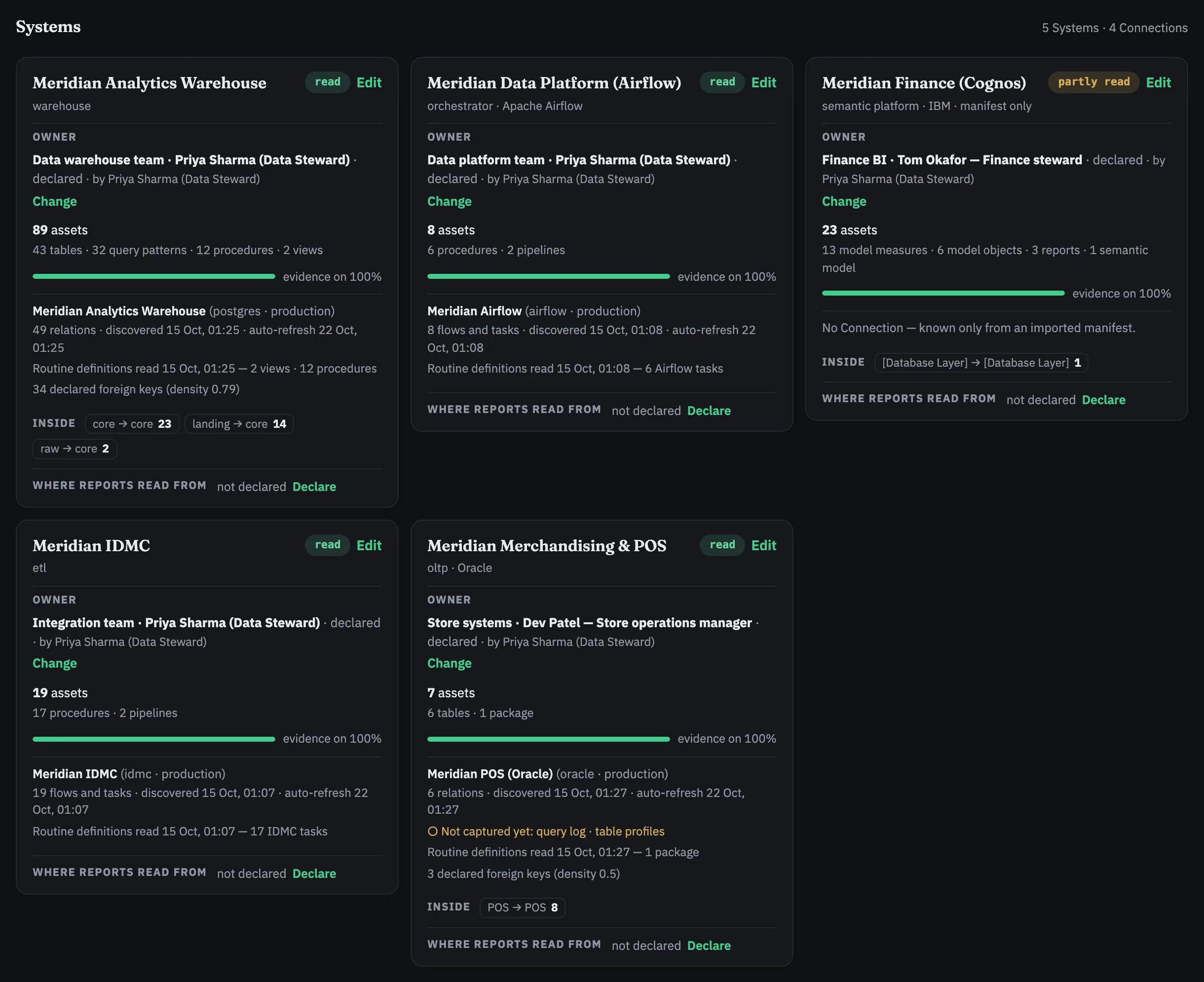
Each system has a card with its state (read, partly read, connected but not read yet, or not connected), the owner your people declared, and what Terazu holds for it. The captures it’s missing sit under “What Ontos can’t see yet”, grouped by connection: where the source supports it, one click runs the capture, after stating what it will run on your system. Query history is different: it’s read only on a connection where a person has turned it on in Connections. Until then the Atlas says it’s off, not that it wasn’t captured; on the demo it’s on for the point-of-sale database and not read yet, so the Atlas offers to read it.
Who is going around the contract?
Where query history is on, bypass evidence compares it with what has been certified: tables people query that no certified definition covers, and certified tables nobody queries. Where it’s off, the Atlas says demand there is unknown, not zero. It reports findings, never tickets, and never names the people behind the queries.
What it doesn’t do
- It can only name what’s declared or referenced somewhere. A system nobody mentions is simply invisible.
- Evidence coverage says evidence exists, not that it’s correct.
- Two connections to one warehouse are counted twice, and the card says so.