Connecting a warehouse is the easy part. Then comes the question every team asks: what now? Terazu answers it on Home, under Do these next, and on the Estate Atlas, under Where to start.
Do these next
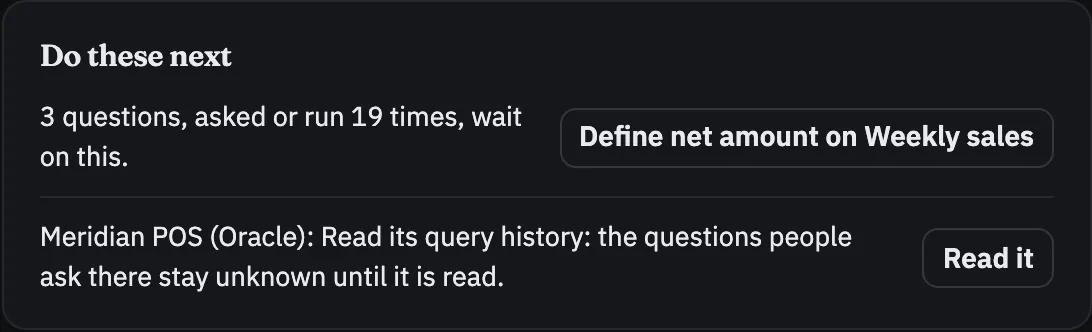
Home puts the next acts first, each with the reason it matters, worked out from what people ask and what Terazu has and hasn’t read:
- The definition that would answer the most. On the demo: three questions, asked or run 19 times, wait on defining net amount on Weekly sales.
- The evidence still missing. On the demo: the point-of-sale database’s query history, because the questions people ask there stay unknown until it’s read.
The Atlas says the same from the estate’s side. On the demo its top line reads: “Where to start: core.sales_by_channel is queried 2 times and nothing certified answers from it yet.”
Open doors: the evidence you don’t have yet
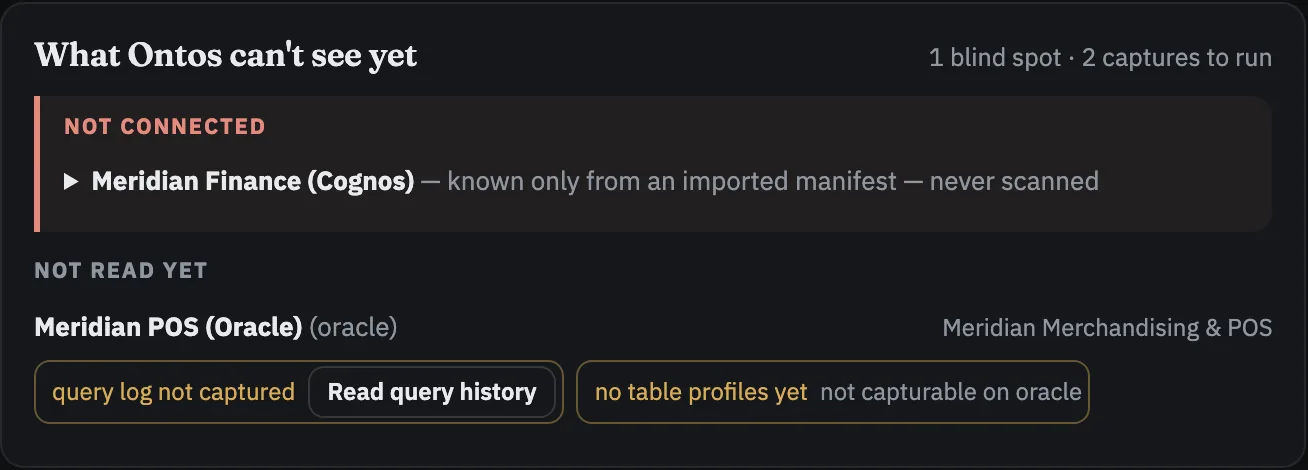
Each open door is a kind of evidence Terazu hasn’t captured, listed strongest first: schema, a BI model, the query log, view and procedure definitions, profiles, key domains, declared foreign keys. Every door says two things before you open it:
- What it unlocks. For the query log, for example: questions ranked by real demand, and joins mined from real statements.
- What it costs. Whether it reads metadata only or runs queries on your systems.
The query log is a door a person opens per connection. On an operational system most of that history is the application’s own traffic, so Terazu reads it only where someone turns query history on in Connections; until then the door says it’s off and points there.
The list is worked out by fixed rules from what is and isn’t captured. No model decides it, and the assistant sees the same list when it tells you something is missing.
Where you act on it
Each door takes you to the right place. The one-click versions are on the Estate Atlas, under “What Ontos can’t see yet”, grouped by connection: a capture first tells you what it will run, and runs only when you confirm. Query history is the exception while it’s off: its door opens Connections.
What it doesn’t do
- It ranks kinds of evidence by strength, not tables by business value. What to certify first comes from the questions people ask.
- No capture runs from Home itself. Each door opens the place where you act, and a capture says what it will run before it runs.